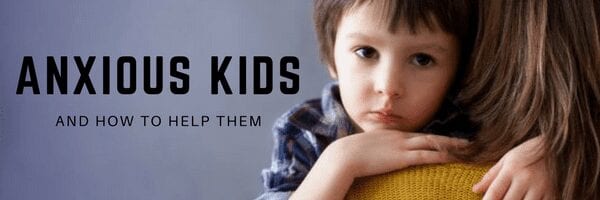
Does your child get worked up easily? Does she stay awake worrying about things that may or may not happen? Does he stress over everyday interactions? It can be difficult to see your child struggle in this way, but there are a wealth of resources available to help you help them cope.
Here are a few of my favorite blogs, articles and references with great ideas and tools for helping your child through their most anxious moments:
I love the website gozen.com for a great introduction to anxiety in children, and I always recommend it in my course. It’s a great resource for parents and professionals, an entire program to help with anxiety and OCD in kids. Here is a great post GoZen shared on Huffington Post.
I really like this page at Coping Skills for Kids. There are so many good ideas for calming strategies!
This site at The Chaos and the Clutter is very helpful – an anti-anxiety kit for kids, and they even explain how bet to use it.
Click on “Youth” at this site from AnxietyBC for pages created just for your kids; I encourage you to review their pages directly with your child, too.
If you’re looking for a more in-depth understanding of the anxiety your child is feeling, this article from Parents is very informative.
If you’re concerned about your child’s anxiety, hopefully these resources will give you a few ideas and tools to begin to help them. For more custom input, get in touch with STEPS for Kids today.
The post Helping your Child with Anxiety appeared first on Right Steps for Kids.
]]>According to the Child Mind Institute, anxiety is the most common emotional problem in children. It can manifest as common fears of the dark, separation issues, problems with social interaction, or persistent worries that interrupt daily activities and sleep.
While some anxious kids are cautious and shy, others have tantrums and emotional meltdowns. Some children withdraw while others develop elaborate rituals to help them feel in control of the world of around them. Anxiety can be an underlying factor in symptoms of sensory processing disorder, with children developing anxiety related to aversive sensory experiences.
Conversely, anxiety can trigger increased symptoms of sensory processing issues, such as intense sensitivity to tactile or auditory input in the presence of anxiety related to school attendance, test taking, social activities or other stressors. Understanding that anxiety may be influencing a child’s behavior is the first step toward finding resolution for a challenging behavior.
Addressing anxiety is often the key to helping children feel secure and confident so they can successfully navigate participation in everyday activities. At STEPS for Kids we recognize how even a little anxiety can have a big impact. Providing the right support and a caring environment can make all the difference in reducing a child’s anxiety.
Quick Strategies to Help Calm an Anxious Child
There are many ways to help a child relax when feeling nervous. Here are some of our favorites that we recommend to parents.
- Redirect with cognitive tasks or humor: Ask the child to perform a cognitive task like naming animals, doing simple math, or telling jokes
- Redirect with a task: ask the child for help with a simple chore or activity, involve them in physical activity like jogging in place or doing an obstacle course
- Breath Activities: Belly breathing with cues like “Smell the flower, blow out the candle” or Breathe a Star by breathing in then out as you follow the outline of a star with your finger for five full breaths
- Provide hugs, comfort, and a calming space depending on the child’s individual preference
- Offer empathy by recognizing the feelings and expressing understanding without judging or criticizing the child’s emotional state
Reduce Anxiety and Avoid the Meltdown
Our goal is always to help children learn the skills they need to reduce anxiety through improved task performance, increased self-awareness, and independence in self-advocacy. We help parents to understand their child’s perspective and to practice empathy for their child’s experiences and needs. By focusing on skills, we recognize that all children are capable of new learning that reduces or eliminate meltdowns.
Teaching proactively is more effective than punishments for “bad behavior” that many parents use in an attempt to manage meltdowns. Keep in mind that children in the midst of a meltdown at the peak of the anxiety curve – no learning occurs due to the intensity of the emotional experience. Teaching when the child is calm is the most effective way to influence behaviors.
To learn more about anxiety in children and for more ideas for calming, read this post or contact us today for more information.
The post Strategies to Help Calm an Anxious Child appeared first on Right Steps for Kids.
]]>One of the most frequently asked questions we get about child behavior is whether a child is engaging in a tantrum or having a “meltdown.” Do you know the difference, or the unique response each one requires?
Most people view tantrums as behavior that a young child engages in to get what they want, to manipulate the situation, or to otherwise gain attention from adults. These are behavioral outbursts to avoid bedtime, get an extra dessert or delay finishing homework.
On the other hand, the word “meltdown” has come to refer to behavior that is characteristically out of control, highly emotional, and often prompted by external factors such as sensory information (loud sounds, overwhelming environment, etc). A child on the spectrum might experience a meltdown after hearing a loud siren or experiencing a negative texture, for example.
How we define these behaviors reflects our perspective toward these behaviors. At STEPS for Kids we emphasize an empathic approach to understanding the child and teaching the necessary skills to reduce BOTH tantrums and meltdowns.
Here are some quick tips to understanding and managing these most challenging behaviors. Download the PDF version here.

The post Tantrum or Meltdown? How to tell, and what to do appeared first on Right Steps for Kids.
]]>